James Pearce Arrives in Arizona (December 1877)
James Pearce, recognized as the first settler of present-day Taylor, arrived in Woodruff—then known as Tenney—on December 13, 1877. He had been called by church leadership to help settle Arizona and traveled from his home in St. George, Utah.
After reaching Woodruff, Pearce left his family there and began searching for a more suitable place to establish a permanent settlement.
Searching the Silver Creek Valley (Late 1877)
While exploring the Silver Creek Valley, Pearce encountered James Stinson, who offered to sell his squatter rights for $18,000. Pearce declined the offer and continued approximately three miles upstream, where he found what he believed to be a better location. Six months later, Stinson sold his original claim to William Jordan Flake.
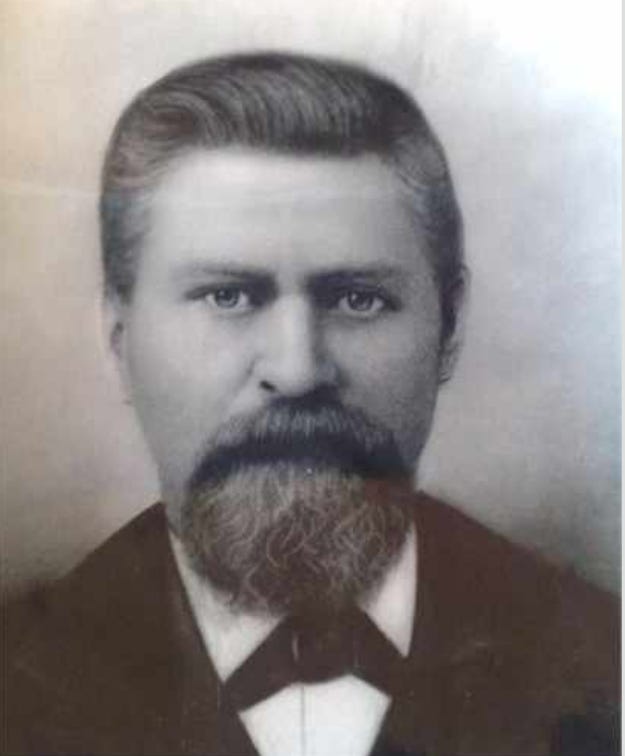
Pearce returned to Woodruff to bring his family to the new site. As they reached a ridgeline overlooking Stinson’s ranch, Pearce’s wife—ill and resting in the wagon—looked up as the family took in the view of the Silver Creek Valley. Despite the winter season, remnants of Stinson’s harvested fields, livestock, permanent structures, and cottonwood trees lining the creek were likely visible.
Founding of Taylor Recognized (January 23, 1878)
The Pearce family camped overnight at Stinson’s ranch, where Stinson attempted to discourage Pearce from settling along Silver Creek. Pearce persisted and moved farther upstream, constructing a temporary dugout.
On January 23, 1878, Pearce and his family arrived at this temporary home. The Town of Taylor officially recognizes this date as the community’s founding.
Early Farming Efforts and Expansion (Spring 1878)
A few months later, John Henry Standifird arrived with his daughter and stayed with the Pearce family. Together, the two men began diverting water from Silver Creek to irrigate crops. Their farming site was located even farther upstream, south of present-day Shumway.
In April 1878, the two families moved upstream to farm, though Pearce retained his squatter claim at his original location in what is now Taylor.
The Settlement Known as Bagley (1878)
During this period, the growing settlement became known as Bagley. In the fall of 1878, Pearce returned to his original dugout as more settlers arrived.
Among them was the Bagley family. Daniel Bagley, called to settle in Arizona, arrived with his wife, children, his divorced adult daughter Margaret Melissa Bagley, and grandchildren. Church leader Jesse N. Smith referred to the settlement as “Bagley’s Camp.”
However, the name did not last. Voter registration records for Yavapai County in 1878 refer to the area as Silver Creek, while present-day Snowflake appears as Stinson Valley.
A New Name: Walker (1879)
By 1879, the settlement was known as Walker. The reason for the name change from Bagley to Walker is unclear, but the name was quickly adopted.
On May 22, 1879, Snowflake Justice of the Peace Joseph Fish recorded that his first official act was marrying James Stinson and Margaret Melissa Bagley. Fish noted that the ceremony took place in Walker. By this time, Stinson had relocated to present-day Taylor after William J. Flake took over his former ranch.
The Walker Family’s Influence (1879–1880)
Around this time, the Walker family arrived with Noah Brimhall. Elizabeth Walker, a widow, came with her four surviving children and their families, including sons Jesse and William Walker. Their sizable presence likely influenced the settlement’s name, as the Walker family represented a significant portion of the small population.
The 1880 U.S. Census lists the town as Walker. Jesse N. Smith, president of the Eastern Arizona Stake of The Church of Jesus Christ of Latter-day Saints, also referred to the community as Walker in a September 1880 journal entry when John Henry Standifird was called as bishop of the Walker congregation.
Becoming Taylor (1880–1881)
Despite local use, the name Walker was rejected by the U.S. Post Office Department because another town with the same name already existed near Prescott.
In late 1880 or early 1881, the name Taylor was adopted at the suggestion of Jesse N. Smith and Mary Jane Pearce, James Pearce’s wife. An earlier settlement named Taylor had existed along the Little Colorado River, where several early Snowflake settlers—including William Jordan Flake and A.Z. Palmer—had once lived. That community was eventually abandoned as residents relocated.
The residents approved the new name, and a post office officially opened under the name Taylor in 1881.
A Town by Many Names
Before settling on its current name, Taylor was known by at least four names: Bagley, Silver Creek, Walker, and finally, Taylor.
This Article is sponsored by:

Call: 928-243-0925 for these amazing properties by the Snowflake Temple
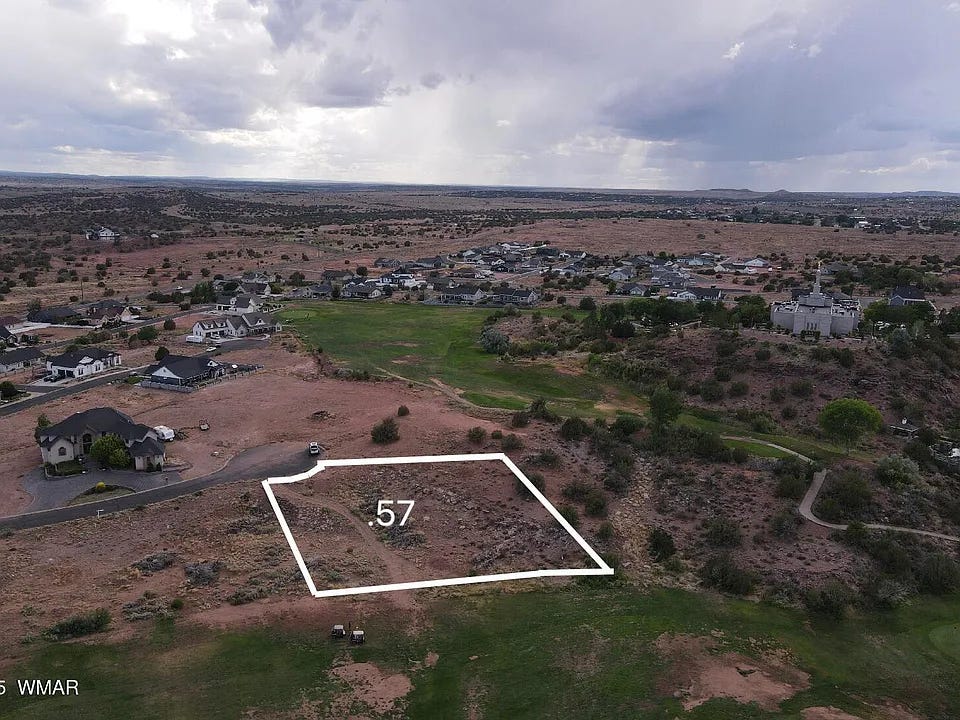
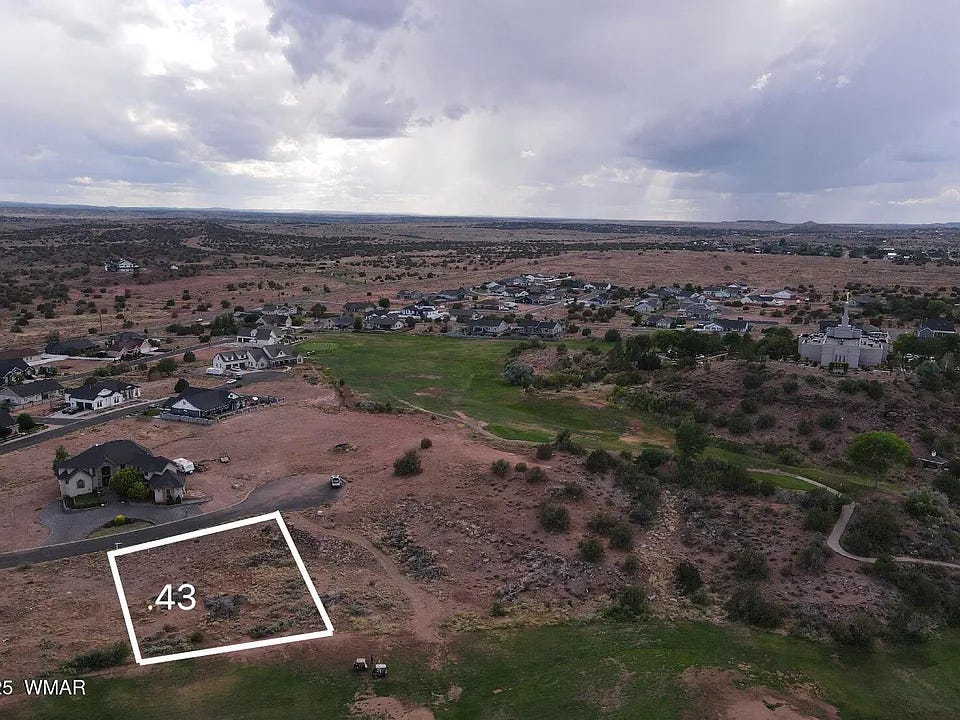
Two golf course, cul-de-sac lots next to each other just southeast of the temple. Buy both lots together to have one full-acre lot. One lot is .57 acres, the other lot is .43 acres. Offered at $59k each