

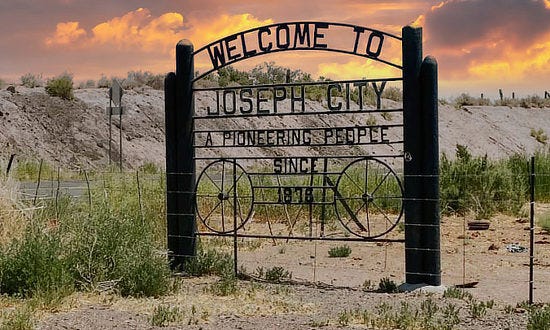
150 Years of Mormon Settlement in Arizona
This year marks the 150th anniversary of continuous Mormon settlement in Arizona. Four original settlements were established in 1876. Since then, the footprint of The Church of Jesus Christ of Latter-day Saints in Arizona has increased dramatically.
Early Exploration of Arizona Territory
Several exploration companies were sent prior to 1876 to the Arizona Territory to find suitable locations for settlements, including those led by Wallace Roundy, Horton D. Haight, and Andrew Amundsen. These expeditions did not speak highly of Arizona or of its ability to support permanent settlements. The trip to Arizona was treacherous, and crossing the Colorado River alone was a significant challenge.
Anticipating the migration and seeking to isolate him from the fallout of the Mountain Meadows Massacre, John D. Lee was sent to improve and operate what became known as Lee’s Ferry. Lee’s Ferry provided the quickest and most direct route across the Colorado River to reach the desired settlement area along the Little Colorado River.
The Little Colorado River’s headwaters begin in the White Mountains of eastern Arizona. The river flows northwest and eventually empties into the Colorado River within Grand Canyon National Park.
More Favorable Reports and Missionary Efforts
Others spoke more favorably of Arizona. Jacob Hamblin completed several missions to the region and became a trusted friend and ally of Native American tribes in northeastern Arizona. Another missionary, James S. Brown, established an outpost near present-day Tuba City. Brown helped establish a route through “Indian Country” and conducted extensive exploration.
Establishment of the Arizona Mission
Years of exploration and growing momentum led President Brigham Young to establish the “Arizona Mission” to colonize the Little Colorado River Basin. The mission was initially divided into four companies of fifty families each, led by four captains. These companies were organized geographically to draw members from throughout Utah.
The Four Original Settlements of 1876
Sunset (North Central Company)
Captain Lot Smith led the North Central Company, consisting of Saints from Salt Lake City and Davis, Morgan, Wasatch, and Summit counties. Their settlement, Sunset, was located just outside present-day Winslow, Arizona, along the Little Colorado River in what is now Homolovi State Park. Sunset did not survive; by 1885, Lot Smith and his family were essentially the only remaining residents.
Brigham City (Southern Company)
Across the river from Sunset stood Brigham City, led by Captain Jesse O. Ballenger. The original fort has since been renovated by residents of Winslow. Brigham City was abandoned in 1881. Ballenger’s Southern Company was comprised of Saints from Sanpete and Juab counties and the southern part of Utah County.
Obed (Northern Company)
Farther upstream along the Little Colorado River was Obed, led by Captain George Lake. The Northern Company included Saints from Weber, Box Elder, and Cache counties. Obed was located on the south side of the river, across from modern-day Joseph City. It was the shortest-lived of the four settlements, abandoned in the fall of 1877 after only eighteen months.
Joseph City (South Central Company)
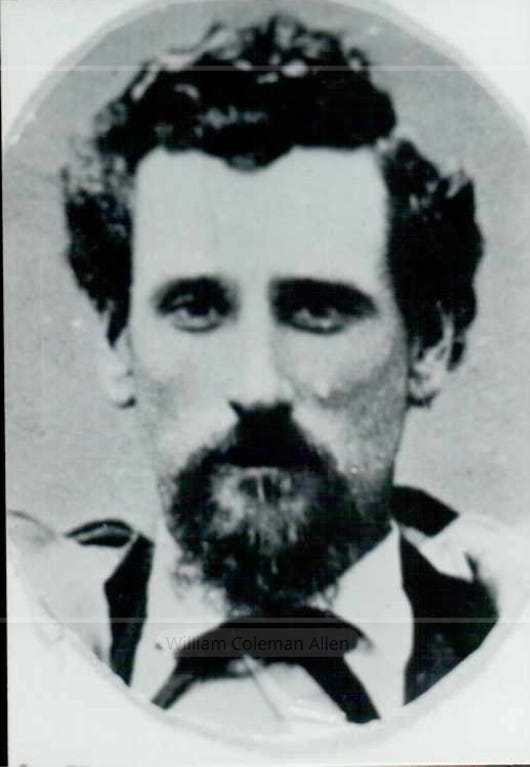
The only surviving settlement from 1876 is the small unincorporated community of Joseph City, Arizona. It was led by William C. Allen and settled by the South Central Company, which included members from northern Utah County, southern Salt Lake County, and Tooele County.
Founding and Name Changes of Joseph City
Allen and his company arrived on March 24, 1876, a date still celebrated annually during Joseph City’s Founders Day. This year marks the 150th celebration.
The settlement was first known as Allen’s Camp and was renamed St. Joseph in 1878. In the 1920s, the railroad requested another name change due to frequent confusion with St. Joseph, Missouri, which lay along the same rail line. The community has been known as Joseph City for the past 100 years.
Early Hardships and Water Challenges
Life in Joseph City was extremely difficult due to the dry, arid, windy, and sandy conditions. The Little Colorado River’s inconsistent flow caused ongoing challenges. Dams were repeatedly built and destroyed by seasonal flooding.
The first dam, begun shortly after arrival in 1876, was completed on June 6 but washed out on July 19 of the same year. Early spring brought excess water when it was not needed, while late spring and early summer brought shortages. Late summer monsoons caused flash flooding. Water quality was poor, with muddy, sediment-filled, and salty water creating additional challenges.
Lasting Infrastructure and Growth
In 1894, a dam was constructed that lasted beyond a single season. That dam remained in use until 1923. The dam built in 1923 is still standing today.
Joseph City currently has a population of just over 1,300 residents. There are three wards in Joseph City, all part of the Winslow, Arizona Stake.
Expansion of Mormon Settlement in Arizona
The four original settlements opened the door for many others called to the Arizona Mission. Communities such as Eagar, Greer, Heber, Lakeside, Lehi, Mesa, Pinetop, Pima, Show Low, Snowflake, St. David, St. Johns, Taylor, Thatcher, and many others were established shortly thereafter.
Today, Arizona is home to nearly 450,000 members of The Church of Jesus Christ of Latter-day Saints, organized into 118 stakes and 904 congregations. Six temples are currently in operation: Mesa (1927), Snowflake (2002), Gila Valley (2009), Gilbert (2014), Phoenix (2014), and Tucson (2017). Three additional temples have been announced for Yuma, Queen Creek, and Flagstaff.
Sources
Colonization on the Little Colorado – The Joseph City Region
by George S. Tanner and J. Morris Richards
Take Up Your Mission – Mormon Colonizing Along the Little Colorado River, 1870–1900
by Charles S. Peterson
This Article is sponsored by:

Are you looking to buy? SEI knows the local market. Let them help you find the home of your dreams!
Are you looking to sell? SEI can help you get top dollar for your home.
Call: 928-243-0000
Visit: https://seirep.com/